
What Balanced Blood Sugar Breakfasts Actually Look Like
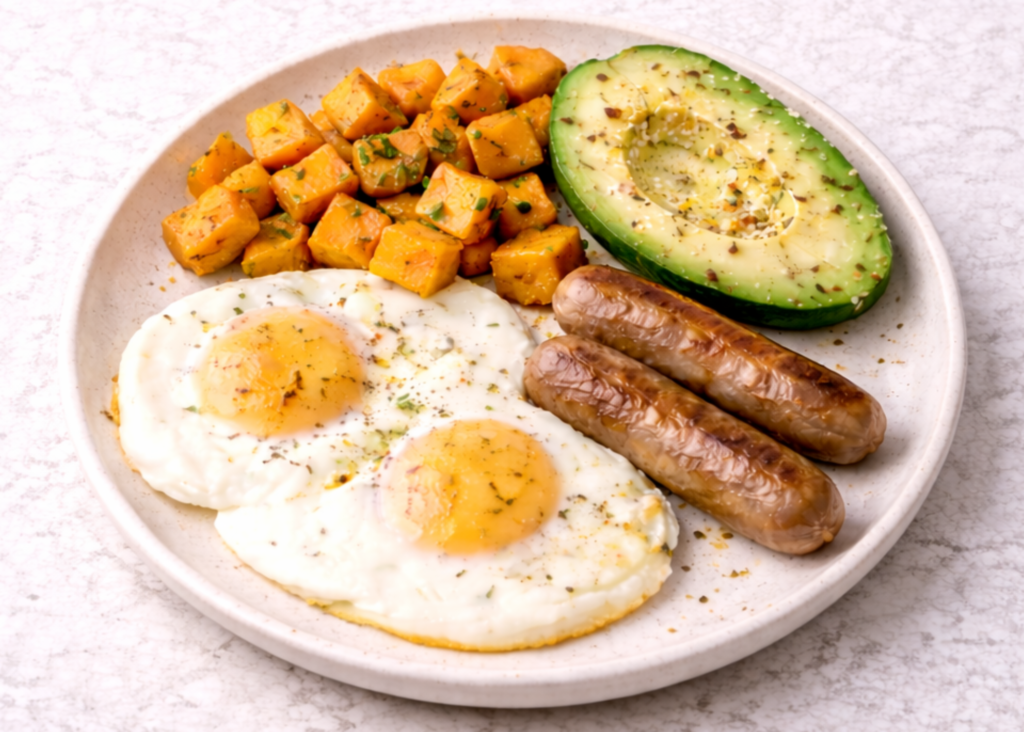
If breakfast feels confusing, you’re not alone.
We’re often told breakfast should look a certain way—cereal, toast, oatmeal, muffins, pancakes, smoothies. Many of these foods are considered normal or traditional breakfast options, even though they’re often very carb-heavy and light on protein and fat.
Balanced blood sugar breakfasts don’t require perfection, tracking, or cutting foods out. They’re built by pairing protein, fat, and carbohydrates in a way that supports steady energy.
In this post, we’ll walk through what that actually looks like in real life.
The Foundation: Protein First
Protein is the anchor of a balanced blood sugar breakfast.
Including protein in the morning helps:
- Slow digestion
- Reduce blood sugar spikes
- Improve satiety
- Support muscle, hormones, and metabolism
Protein doesn’t have to be complicated or fancy—and it doesn’t have to come from “breakfast foods.”
Examples of breakfast-friendly protein sources:
- Eggs
- Leftover meat (chicken, beef, pork, turkey)
- Sausage or bacon
- Greek yogurt or cottage cheese
- Tofu or tempeh
A note on eggs
Eggs aren’t required for a balanced breakfast—but they are a great option. They provide protein, healthy fats, and important nutrients like choline, which supports brain and liver health.
If eggs work well for you, they can be an easy, reliable foundation. If they don’t, there are plenty of other ways to get protein in the morning.
Add Fat for Stability and Satisfaction
Fat works alongside protein to slow digestion and support steadier blood sugar.
Without enough fat, breakfast often feels unsatisfying—and hunger returns quickly.
Examples of healthy fats to include at breakfast:
- Butter or ghee
- Olive oil
- Avocado
- Full-fat dairy
- Nuts and seeds
Fat doesn’t need to be excessive. Even a modest amount can make a noticeable difference in how breakfast feels and how long energy lasts.
Carbohydrates: Choose the Type and the Portion
Carbohydrates provide energy, but the type of carbohydrate—and the portion—matters.
Some carbohydrates are easier on blood sugar than others, especially for people with insulin sensitivity. The type of carb matters.
Easier-on-blood-sugar carbs
These tend to be less dense and often contain more water and fiber:
- Squash
- Sweet potatoes
- Potatoes
- Fruit
- Non-starchy vegetables
Many people can eat larger portions of these carbs while still maintaining balanced blood sugar.
More dense carbohydrate options
Foods like:
- Oatmeal
- Whole grain bread
- Toast
- Baked goods made with whole grains
…can still be part of a balanced breakfast, but they are more concentrated sources of carbohydrates. For some people—especially those with insulin resistance or blood sugar sensitivity—smaller portions may be better tolerated.
This doesn’t make these foods “bad.” It simply means that portion size and pairing matter.
Breakfast Doesn’t Have to Look Like Breakfast
Many popular Western breakfasts are closer to dessert than a balanced meal. Sweetened cereals, pastries, muffins, pancakes, and sugary drinks can cause quick blood sugar spikes—especially when eaten on their own.
While this may be the cultural norm, it doesn’t mean we have to stick to it.
Breakfast can be:
- Leftovers from dinner
- Savory foods
- Meals that don’t fit a traditional breakfast category
There’s no rule that says you can’t eat meat, vegetables, or starches in the morning. In fact, many people feel better when breakfast looks more like a balanced meal than a sweet snack.
What Balanced Blood Sugar Breakfasts Actually Look Like
Here are a few examples of how protein, fat, and carbohydrates come together:
- Eggs cooked in butter + roasted sweet potatoes + fruit
- Leftover chicken or beef + squash + avocado
- Greek yogurt + berries + nuts
- Sausage or bacon + potatoes + vegetables
The goal isn’t variety for the sake of variety—it’s balance.
It’s Okay to Keep Breakfast Simple
Some people enjoy variety at breakfast. Others prefer eating the same thing most mornings. Both approaches are perfectly fine.
If simplicity works for you, sticking to one or two go-to breakfasts can reduce decision fatigue and make mornings easier.
For example, a balanced breakfast could look like:
- Eggs
- A starch
- A cup of hot bone broth
- Fruit
- Leftover meat from the day before (if available)
Eating a similar breakfast most days doesn’t mean you’re stuck—it means you’ve found something that works.
Bringing It All Together
Balanced blood sugar breakfasts don’t have to follow strict rules or look a certain way.
They’re built by:
- Prioritizing protein
- Including fat for stability
- Choosing carbohydrates thoughtfully
- Letting go of the idea that breakfast must look like dessert
When breakfast is balanced, energy feels steadier, hunger is more manageable, and food decisions throughout the day often become easier.
The goal isn’t perfection—it’s support.