
Grocery Shopping for Balanced Blood Sugar
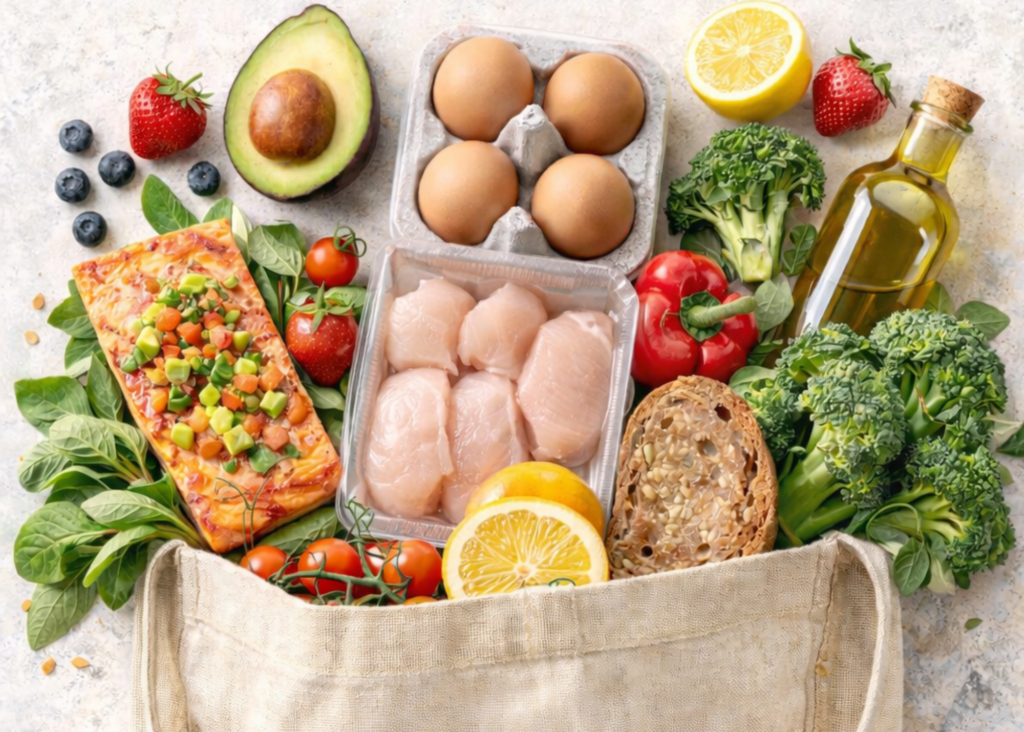
Balanced blood sugar doesn’t start at the stove — it starts at the grocery store. How you shop has a huge impact on how easy (or hard) it feels to put balanced meals together during the week.
The good news? Grocery shopping for balanced blood sugar doesn’t require special foods, strict rules, or hours of label reading. It’s about having a simple framework and building your cart with intention.
Start With Protein First
When grocery shopping for balanced blood sugar, think the same way you eat: start with protein, then build around it.
Before you even think about snacks, sauces, or sides, ask yourself:
- What proteins will I use for meals this week?
Examples include:
- Chicken
- Beef
- Fish or seafood
- Eggs
- Turkey
- Pork
- Greek yogurt or cottage cheese
Protein is the foundation of blood sugar–friendly meals. When you start your grocery trip here, the rest of your shopping naturally becomes more balanced.
Once protein is in your cart, you can build around it with:
- Healthy fats
- Carbohydrates
- Non-starchy vegetables
This keeps meals more satisfying and helps prevent blood sugar swings later.
Build Around Protein With Fats, Carbs, and Veggies
After protein, think about what you’ll pair with it:
- Fats like olive oil, avocado, butter, cheese, nuts, or seeds
- Carbohydrates such as potatoes, rice, fruit, beans, or squash
- Vegetables for fiber, volume, and nutrients
You don’t need every category for every meal, but shopping with these building blocks in mind makes balanced meals much easier to assemble at home.
Shop the Outer Edges (Most of the Time)
A helpful guideline is to do most of your shopping around the outer edges of the grocery store. This is where you’ll usually find:
- Fresh meat and seafood
- Eggs and dairy
- Produce
- Frozen foods
This doesn’t mean you can only shop the perimeter or that everything in the center aisles is off-limits. Think of it as a majority rule, not a strict one. After all, spices and condiments live in the middle aisles, which can add flavor and delight to healthy, balanced meals.
Most highly processed foods also tend to live in the middle aisles though, and that is why prioritizing the edges for the majority of your shopping naturally supports more blood sugar–friendly choices.
Take Inventory Before You Go
One of the simplest ways to support balanced blood sugar is to shop with a plan.
Before heading to the store:
- Check what proteins you already have
- See what veggies need to be used
- Notice what you’re running low on
Making a list (or even ordering groceries online) helps prevent impulse buys and ensures you come home with ingredients that actually make meals easier.
This also reduces those “nothing sounds good” moments that often lead to skipping protein or relying on quick carb-only options.
If you’re not sure how to turn your groceries into balanced meals, planning ahead using this simple method for building balanced blood sugar meals makes grocery shopping more intentional and meals much easier to put together throughout the week.
Use Frozen Foods to Your Advantage
Keeping balanced meals available doesn’t mean everything has to be fresh.
Stocking your freezer with quick, protein-based options can be a game changer for busy days or last-minute meals. Frozen proteins are especially helpful when you’re short on time and don’t want to resort to fast food or eating just carbs.
Great freezer staples include:
- Shrimp
- Meatballs
- Frozen burgers
- Frozen chicken strips
These can often be cooked straight from frozen or thawed quickly, making it much easier to throw together a balanced meal at home.
Pair them with:
- Frozen vegetables
- A simple carb
- A fat you already have on hand
And dinner is done.
Keep It Simple and Sustainable
Grocery shopping for balanced blood sugar isn’t about doing it perfectly. It’s about making choices that support steadier energy, fewer crashes, and meals that actually satisfy you.
When you:
- Start with protein
- Build around it with fats, carbs, and veggies
- Shop mostly whole foods
- Plan ahead when you can
- Keep freezer staples on hand
Balanced meals become easier — and more consistent — without feeling restrictive.
That’s the goal.