
Why the Type of Carbohydrate Matters for Blood Sugar
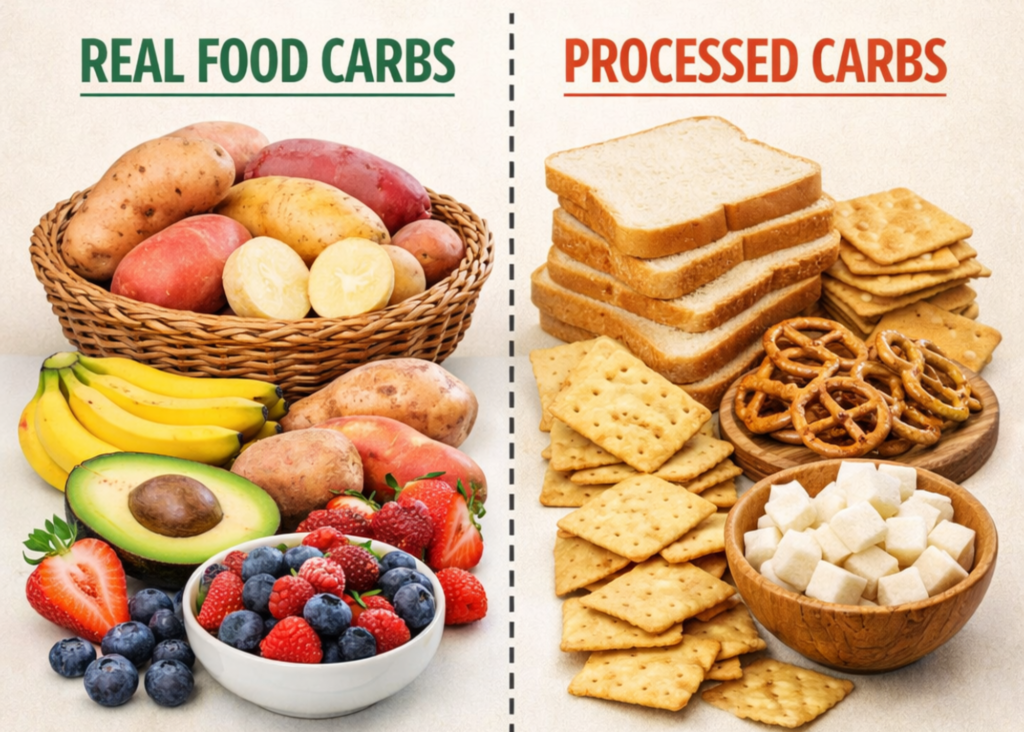
By now, you know that balanced blood sugar isn’t about eliminating carbohydrates—it’s about how carbohydrates are eaten and what kind they are.
In the last post, we talked about how protein, fat, and carbohydrates work together to create steadier blood sugar. In this post, we’re going to zoom in even further and look at why the type of carbohydrate you choose matters just as much as the pairing.
Not all carbs behave the same in the body. Some support stable energy and satisfaction, while others are more likely to lead to spikes, crashes, and persistent cravings.
Carbohydrates Are More Than Just Sugar
Carbohydrates are often discussed only in terms of how quickly they raise blood sugar. But that’s only part of the picture.
Carbs also:
- Deliver energy
- Carry fiber
- Provide essential vitamins and minerals
- Signal fullness and satisfaction
When we focus only on blood sugar numbers and ignore nutrient quality, we miss a big piece of what actually helps the body feel balanced.
Fiber: The Blood Sugar Buffer
One of the biggest differences between carbohydrates is fiber content.
Fiber is the part of a carbohydrate that the body can’t fully digest. Because of that, it plays a powerful role in blood sugar balance.
Fiber helps blood sugar by:
- Slowing digestion
- Reducing how quickly glucose enters the bloodstream
- Supporting gut health
- Increasing fullness after meals
Carbohydrates that naturally contain fiber tend to produce a slower, steadier rise in blood sugar compared to refined carbs that have had their fiber removed.
Examples of higher-fiber carbohydrate sources:
- Vegetables
- Fruits (especially berries)
- Beans and lentils
- Whole grains
- Squash and root vegetables
Fiber doesn’t work alone—it works with protein and fat to create a calmer blood sugar response.
Refined Carbs vs. Fiber-Rich Carbs
Refined carbohydrates are foods where much of the fiber and structure has been removed.
Examples of refined carbs:
- White bread
- Crackers and chips
- Pastries
- Sugary cereals
- Sweets and baked goods made with refined flour
These foods digest quickly because there’s very little slowing the process down. Blood sugar rises fast—and often falls just as fast.
Fiber-rich carbohydrates, on the other hand, still contain their natural structure. The body has to work harder to digest them, which leads to steadier energy and better satiety.
Micronutrients Matter More Than We’re Taught
Another major difference between carbohydrates is micronutrient density.
Micronutrients include vitamins and minerals like magnesium, potassium, zinc, B vitamins, and antioxidants. These nutrients are involved in:
- Glucose metabolism
- Insulin sensitivity
- Energy production
- Hormone balance
Many processed carbohydrates provide calories but very few micronutrients. They deliver energy without nourishment.
Nutrient-dense carbohydrates, on the other hand, provide both fuel and building blocks.
Examples of nutrient-dense carbs:
- Potatoes and sweet potatoes
- Squash
- Fruits
- Beans and lentils
- Whole grains
When carbohydrates still contain their natural vitamins and minerals, the body receives more of what it actually needs.
Why Nutrient Density Affects Cravings
Cravings are often blamed on “lack of willpower,” but they’re frequently a signal of unmet nutritional needs.
When the body gets energy without enough micronutrients, it keeps asking for more food—hoping to fill in the gaps.
This is why it’s possible to eat plenty of calories and still feel unsatisfied.
When meals include carbohydrates that provide:
- Fiber
- Vitamins
- Minerals
- Antioxidants
…the body is more likely to register true nourishment.
Over time, this can lead to:
- Fewer cravings
- More satisfaction from meals
- Better appetite regulation
- Less constant snacking
In other words, the more micronutrient value food provides along with energy, the better the body responds.
Real Food vs. Processed Food
This is where the conversation naturally turns toward real food.
Real, minimally processed carbohydrates:
- Retain fiber
- Contain a wide range of micronutrients
- Digest more slowly
- Support both blood sugar and overall health
Highly processed carbohydrates:
- Have fiber stripped away
- Are often fortified rather than naturally nutrient-rich
- Digest quickly
- Are easier to overconsume
Balanced blood sugar eating doesn’t require avoiding processed foods entirely—but prioritizing real food most of the time makes blood sugar balance far easier.
A Simple Comparison: Same Calories, Different Response
Two meals can provide a similar amount of carbohydrates—or even similar calories—and still affect blood sugar very differently.
Example 1:
- Crackers on their own
- vs. roasted potatoes with olive oil and a protein source
Both provide carbohydrates, but potatoes naturally contain fiber, potassium, vitamin C, and resistant starch (especially when cooled). When paired with fat and protein, they tend to lead to steadier energy and greater satisfaction than refined crackers.
Example 2:
- Sugary cereal with milk
- vs. oatmeal topped with fruit and nuts
Oatmeal retains its fiber and structure, while fruit adds additional fiber and micronutrients. Nuts contribute fat and protein. The result is a slower blood sugar rise and longer-lasting fullness compared to cereal that’s been heavily refined.
These aren’t rules—they’re illustrations of how food structure and nutrient density matter.
Putting It All Together
The goal isn’t to label carbohydrates as “good” or “bad.” The goal is to understand how different carbohydrates affect the body.
Carbohydrates that come packaged with:
- Fiber
- Micronutrients
- Natural structure
…support steadier blood sugar, better satisfaction, and fewer cravings.
When those carbohydrates are paired with protein and fat, the benefits are even greater.
Quick takeaway: Choosing carbohydrates that provide fiber and micronutrients—rather than just calories—supports steadier blood sugar, better satisfaction, and fewer cravings, especially when paired with protein and fat.
Start by focusing on this simple idea:
Choose carbohydrates that nourish your body, not just feed it.