
Ice Cream Test (CGM Results)
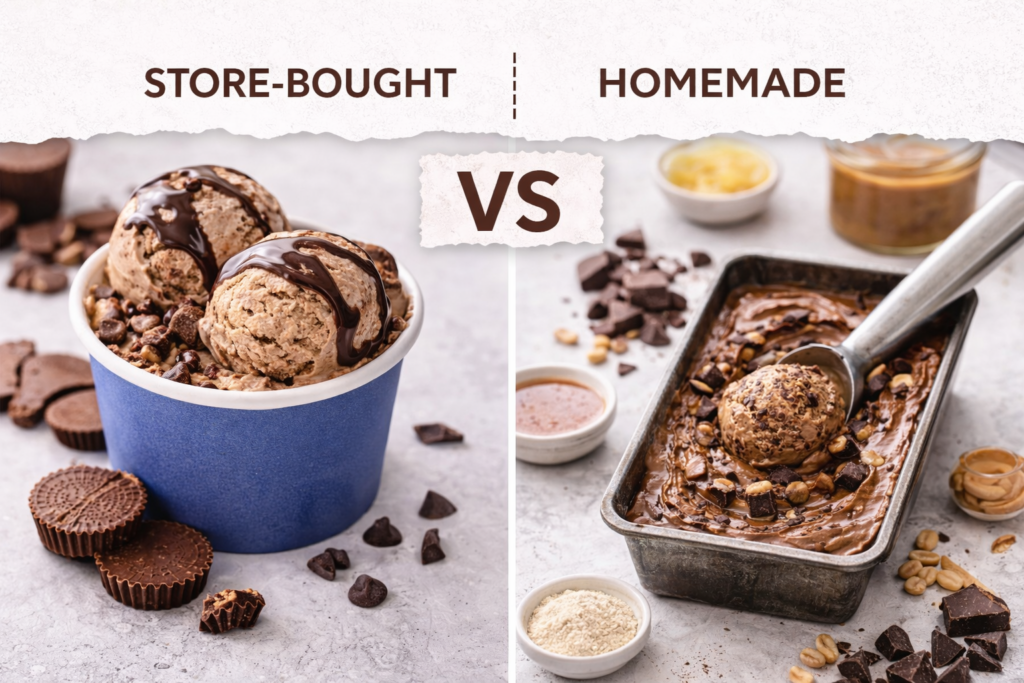
Most people assume ice cream = blood sugar spike. And usually that’s true. But I wanted to test something for myself. That’s why I did an Ice Cream Test with my homemade ice cream vs a store-bought ice cream using my Continuous Glucose Monitor (CGM) to see my blood sugar response.
I’ve been working on a homemade ice cream recipe that’s:
- Higher in protein
- Higher in fat
- Lower in sugar
- Made with simple, real ingredients
So I decided to compare it directly against a typical store-bought option. While these results are just my personal response, and blood sugar results will vary person to person, the outcome of my experiment may be worth considering.
The Experiment
I wore my CGM and tested two types of ice cream on separate days:
- Store-bought: Store-bought peanut butter cup ice cream
- Homemade: My chocolate peanut butter ice cream (high protein, high fat, low carb)
To keep things consistent:
- Both were eaten on their own so I could see the full impact.
- I tested each one around the same time (~ 12:30pm)
- I ate a similar breakfast each morning beforehand
- I ate 1 cup of each ice cream (even though the store-bought serving size is smaller)
My Homemade High Protein Ice Cream
Here’s the exact base I tested using my ice cream maker:
- 2 cups heavy cream
- 3 cups water
- 8 large eggs
- 4 egg yolks
- 1 cup collagen peptides
- 1/4 cup raw honey
- 2 tsp blackstrap molasses
- 1 tsp monk fruit
- 1 tsp salt
- 4 tbsp vanilla extract
- 1/2 cup peanut butter
- cocoa powder
Macros:
- Calories: ~425
- Fat: ~30g
- Carbohydrates: ~14g
- Sugar: ~9g
- Protein: ~26g
This version is built with a combination of fat, protein, and a lower amount of sugar using simple, real food ingredients.
The Store-Bought Ice Cream
Here is the label for this particular ice cream:
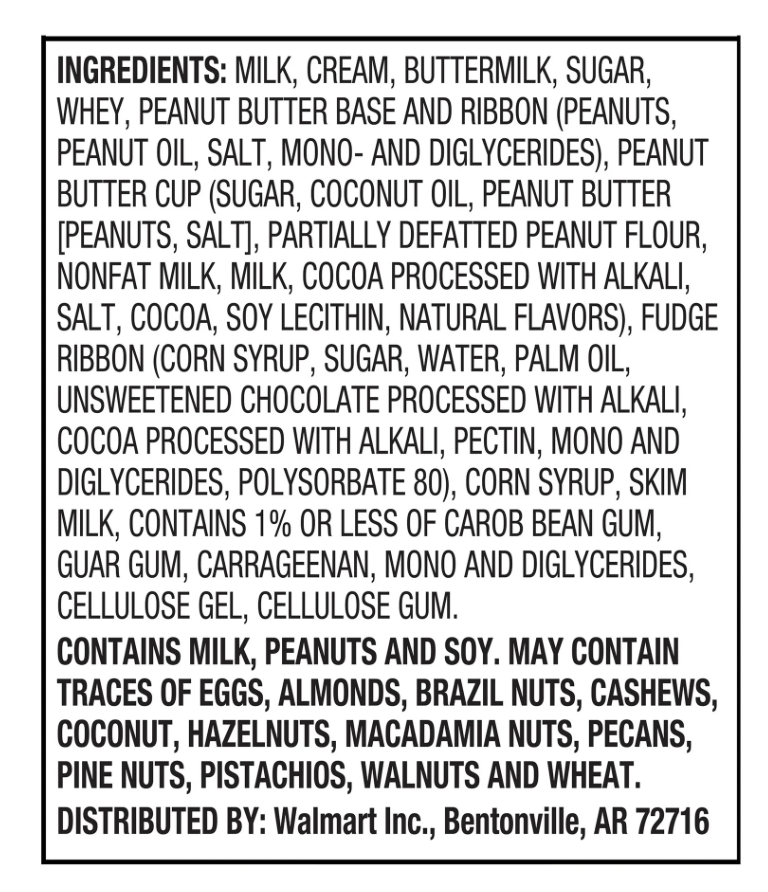
Macros:
(Label serving is 2/3 cup, so the below is scaled up to equal a 1 cup serving)
- Calories: ~330
- Fat: ~18g
- Carbohydrates: ~34g
- Sugar: ~29g
- Protein: ~6g
What stood out to me:
- Higher sugar content
- Lower protein
- More processed ingredients (like corn syrup)
- Less overall nutrient balance
What Happened
The results weren’t even close.
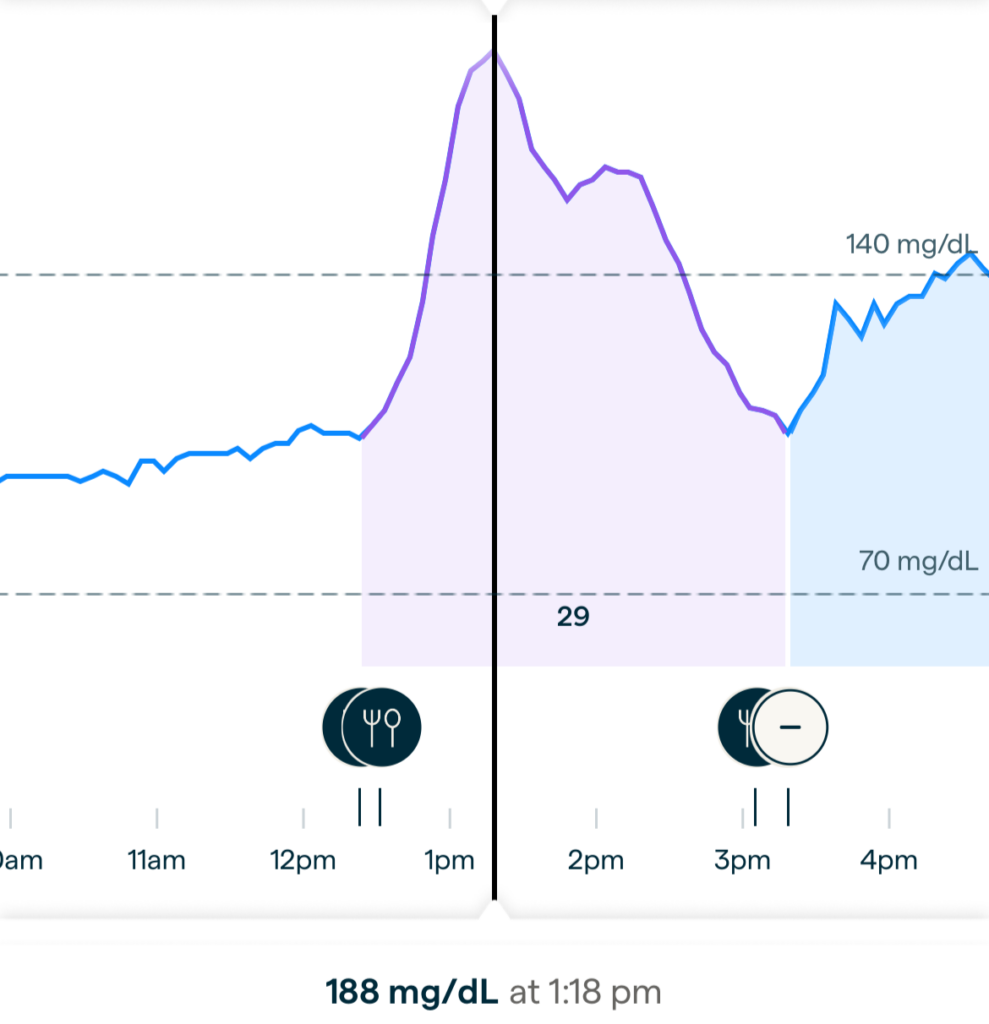
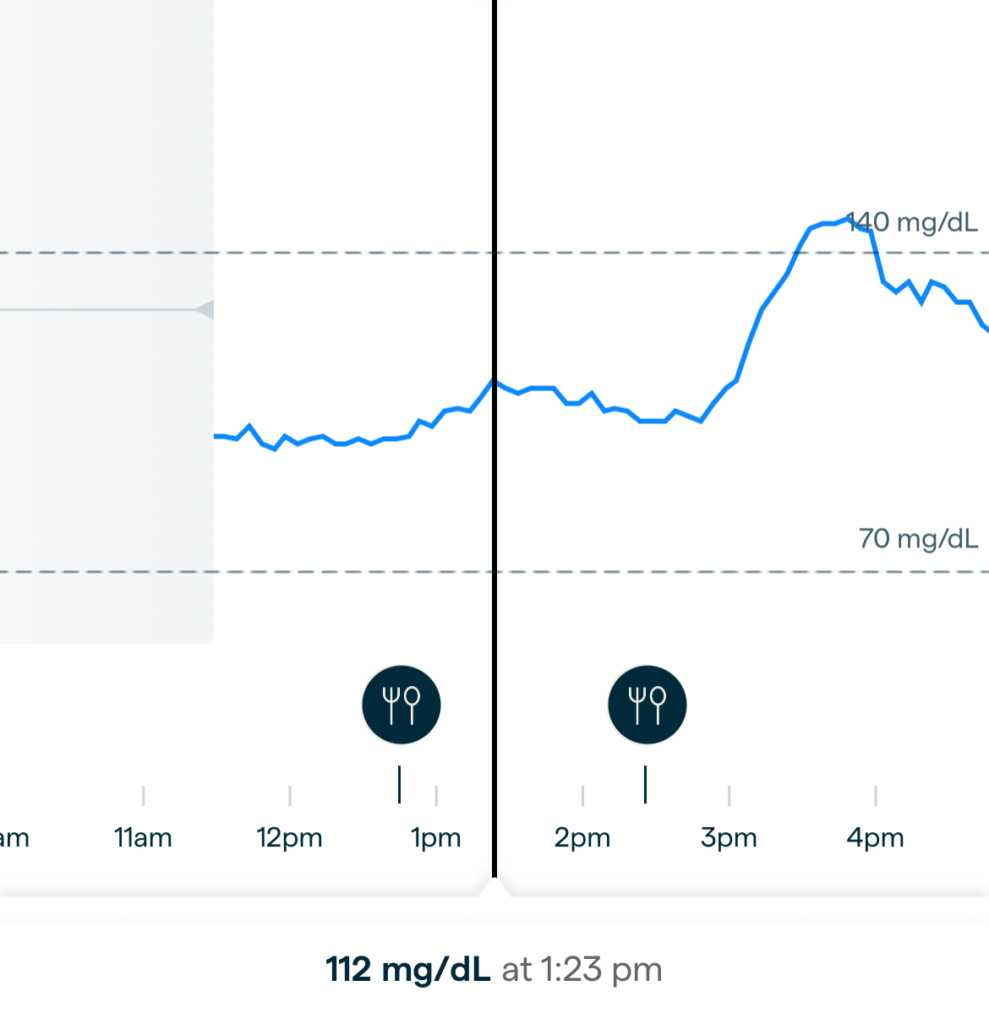
The store-bought ice cream caused a noticeable spike in my blood sugar, peaking at 188 mg/dL.
But my homemade version?
While I expected it to be much better, I was shocked at how little my blood sugar increased. My blood sugar stayed almost completely stable, rising only slightly to a high of 112 mg/dL.
My homemade ice cream has about 1/3 of the sugar, so a smaller response makes sense.
But what stood out wasn’t just the lower sugar—it was how stable my blood sugar stayed.
But with what I know about blood sugar – the fact that it’s actually not as simple as just sugar or carb count alone- I decided to run one more test.
I thought it may be interesting to compare the store-bought ice cream with one of my homemade ice creams that has similar sugar content to the store-bought ice cream.
One More Test: Traditional Homemade Ice Cream (Cream, Milk, Honey)
Here are the ingredients I used for a higher sugar homemade ice cream:
- 3 cups heavy cream
- 1 cup milk
- 5 yolks
- 3/4 cup honey
- 1/4 cup peanut butter
- 1 tbsp vanilla extract
- 1/4 tbsp salt
- 4 tbsp collagen peptides
Let’s take a look at the macros.
- Calories: ~555
- Fat: ~48g
- Carbohydrates: ~29g
- Sugar: ~28g
- Protein: ~12g
With this recipe being high in fat, and moderate in protein, considering what I know about blood sugar (if you want understand why, read Protein, Fat, and Carbohydrates: How They Work Together ), I expected the spike to be less than the store bought ice cream despite the similar sugar content.
But it was actually even smaller than I expected.
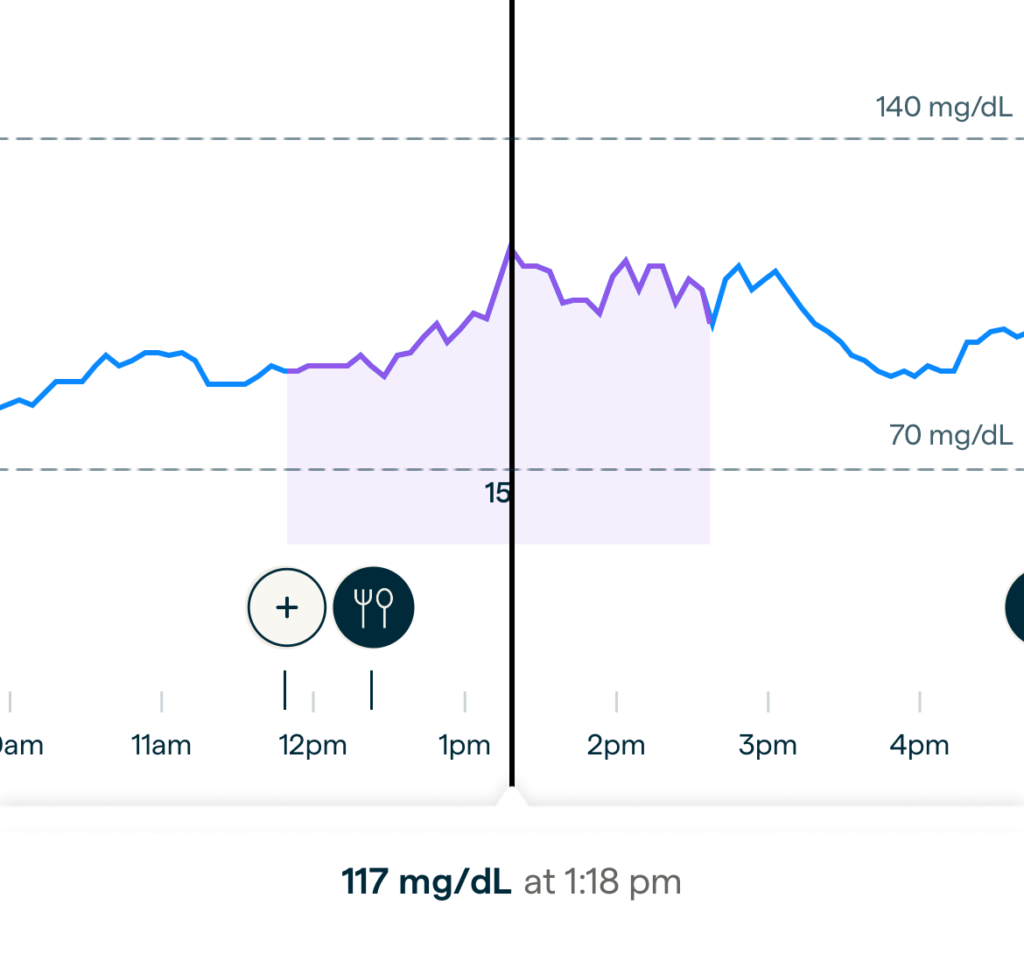
My blood sugar peaked at 117 mg/dL with this homemade ice cream compared to the 188 mg/dL spike from the store bought ice cream.
Even though it contains nearly the same amount of sugar as the store bought, it also has:
- A significant amount of fat (from cream)
- Some protein (from milk, egg yolks snd collagen peptides)
It’s important to note that this ice cream does have a considerably high amount of calories and fat and therefore may not be an every day dessert for many people even though it may keep blood sugar steady.
But that doesn’t mean that this experiment can’t show something valuable – and that is the importance of how meals are built.
The result of this test put into play the principles of building balanced meals in order to maintain a balanced blood sugar just as these articles explain: What Balanced Blood Sugar Eating Actually Means and A Simple Way to Build Meals for Balanced Blood Sugar
Why the Results Might Surprise You
Most people think:
“More sugar = bigger spike”
But it’s not that simple.
What matters more is:
What the sugar is eaten with
- Fat slows digestion
- Protein helps stabilize blood sugar
- Whole ingredients are processed differently than ultra-processed ones
That’s why:
- The store-bought version spiked more
- The high-protein version stayed stable
- The traditional homemade version caused only a small bump
It’s easy to assume this is only about “less sugar.”
But as shown with this simple ice cream test, it’s clear- it’s really about the combination of nutrients.
The Bigger Takeaway
For me? First, I can enjoy ice cream without experiencing a major blood sugar.
Second, it’s not just about:
- avoiding sugar
- or labeling foods as “good” or “bad”
This isn’t even about “never eat store-bought ice cream.”
It’s about understanding why different foods affect you differently.
Two foods can both be called “ice cream” but your body can respond to them in completely different ways.
What This Means for Balanced Blood Sugar
If you’re trying to:
- Avoid energy crashes
- Stay full longer
- Support stable blood sugar
It’s not just about cutting carbs.
It’s about building meals (and even desserts) with:
- Protein
- Fat
- And more balanced ingredients
Final Thoughts
I didn’t expect the difference to be this dramatic.
But it really shows:
The type of food matters just as much as the category.
And sometimes, a simple swap (even with something like ice cream) can completely change how you feel after eating it.