
Balanced Blood Sugar Dinners
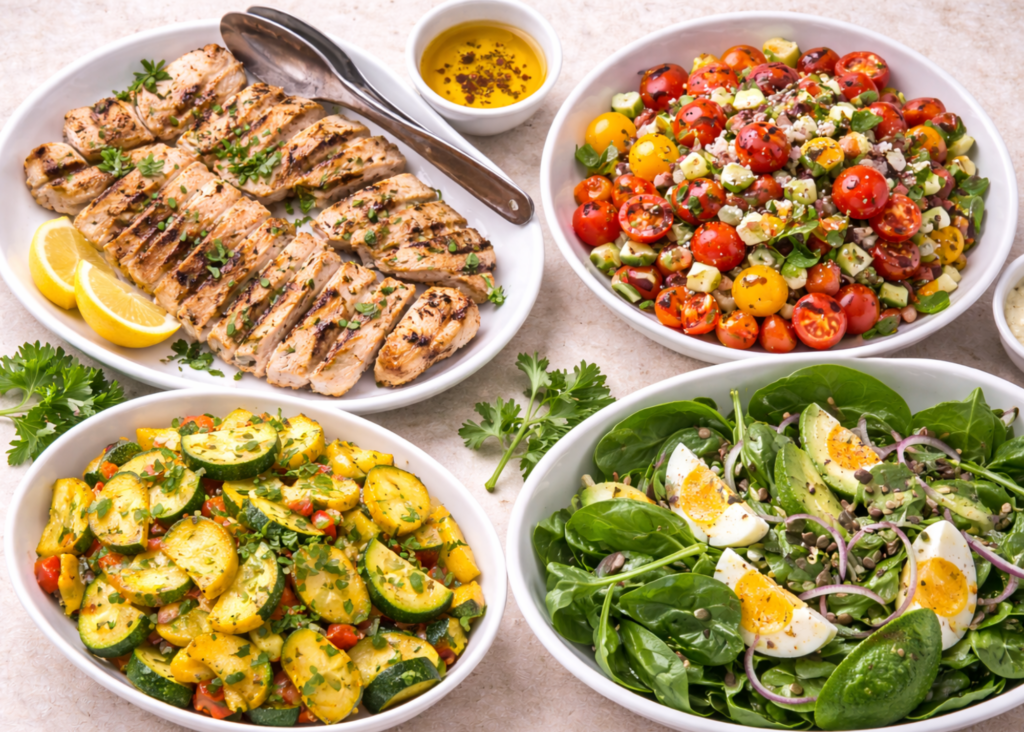
Dinner doesn’t need to be complicated to support balanced blood sugar.
One of the simplest and most effective ways to build a blood sugar–friendly dinner is to start with protein, then layer in fat, a healthy carbohydrate, and non‑starchy vegetables. This approach removes guesswork and works across many styles of cooking—from simple plates to casseroles, crockpot meals, and soups.
Rather than focusing on rules or restriction, this framework gives you a reliable way to build meals that feel satisfying, nourishing, and sustainable.
Start with Protein: The Foundation of Dinner
Protein is the most important anchor of a balanced blood sugar dinner.
Starting with protein helps:
- Slow digestion
- Reduce blood sugar spikes
- Increase satiety
- Support muscle, metabolism, and hormone health
When protein is in place, the rest of the meal becomes easier to build.
Examples of dinner-friendly protein sources:
- Chicken (thighs, breasts, shredded or roasted)
- Beef (steak, ground beef, roast)
- Pork (chops, tenderloin, pulled pork)
- Fish and seafood (salmon, shrimp, cod)
- Eggs (for lighter dinners or added to dishes)
- Beans or lentils (also provide carbohydrates)
Think of protein as the base of the meal—everything else supports it.
Add Fat for Stability and Satisfaction
Fat works with protein to slow digestion and help blood sugar rise more gradually.
Including fat at dinner often leads to better satisfaction and fewer late‑night cravings.
Examples of healthy fats to include at dinner:
- Olive oil or avocado oil
- Butter or ghee
- Avocado
- Full‑fat dairy (cheese, sour cream, yogurt)
- Nuts and seeds
Fat doesn’t need to be excessive. Even small amounts can make meals feel more complete and steady.
Include a Healthy Carbohydrate
Carbohydrates provide energy and help round out a meal. The key is choosing carbohydrates thoughtfully and pairing them with protein and fat.
Examples of healthy carbohydrates at dinner:
- Potatoes or sweet potatoes
- Squash
- Rice (white or brown)
- Quinoa
- Beans or lentils
- Fruit (occasionally, depending on the meal)
Different carbohydrates affect blood sugar differently, and portion size matters. Some people may tolerate larger portions of potatoes or squash more easily than denser grains—but all of these foods can fit into balanced blood sugar dinners when paired well.
Don’t Forget Non‑Starchy Vegetables
Non‑starchy vegetables add fiber, volume, and micronutrients without significantly raising blood sugar.
They help meals feel more satisfying while supporting digestion and overall health.
Examples of non‑starchy vegetables:
- Broccoli, cauliflower, Brussels sprouts
- Green beans
- Zucchini and summer squash
- Bell peppers
- Leafy greens
- Onions, garlic, mushrooms
Vegetables can be roasted, sautéed, steamed, or added directly into mixed dishes.
The Simplest Way to Build a Dinner Plate
If you want an easy visual guide, think:
- Protein: What is the main component of the meal?
- Fat: What adds richness and slows digestion?
- Carb: What provides energy?
- Vegetables: What adds fiber and nutrients?
This approach works whether your dinner is a neatly plated meal or something more casual.
Balanced Blood Sugar Dinners Don’t Have to Be Separate Foods
While building a plate with individual components is simple, it’s not the only option.
Casseroles, crockpot meals, and soups can also support balanced blood sugar—as long as they start with a solid protein base.
Casseroles
- Start with meat, poultry, eggs, or beans
- Add vegetables and a carbohydrate
- Include fat through cooking methods or ingredients like cheese or oil
Crockpot Meals
- Build around a protein (roast, chicken, stew meat)
- Add vegetables and a starch
- Let fat come from the protein itself or added oils
Soups and Stews
- Begin with protein (meat, poultry, beans)
- Add vegetables generously
- Include potatoes, rice, or beans for carbohydrates
The structure still matters—even when everything is mixed together.
Bringing It All Together
Balanced blood sugar dinners don’t require perfection or complicated recipes.
They’re built by:
- Starting with protein
- Adding fat for stability
- Including a healthy carbohydrate
- Rounding things out with non‑starchy vegetables
This framework works for quick weeknight meals, slow cooker dinners, and comfort foods alike.
When dinner is built this way, meals tend to feel more satisfying, energy stays steadier, and food decisions become simpler.
The goal isn’t to make dinner rigid—it’s to make it supportive.