
Common Blood Sugar Mistakes
If you’ve ever felt like you’re doing everything “right” with your eating—but still dealing with energy crashes, cravings, or feeling hungry all the time—there’s a good chance it’s not what you’re eating.
It’s how you’re eating it.
The good news? Most blood sugar issues come down to a few really common (and fixable) habits.
Nothing extreme. No cutting out entire food groups. Just small adjustments that make a big difference.
If you’re new to this way of eating, it may help to first understand what balanced blood sugar eating actually means and how to build simple balanced meals.
Let’s walk through the most common blood sugar mistakes—and the simple fixes that actually work.
1. Thinking in “Good vs. Bad Foods”
The mistake:
Labeling foods as “good” or “bad” often leads to restriction… which usually ends in cravings, overeating, or feeling out of control around certain foods.
The fix:
Focus on building balanced meals instead.
Instead of avoiding carbs, pair them with protein and fat and consider the type of carb you are eating so your body can process them more steadily.
Example:
- Toast → toast + eggs + butter
- Fruit → fruit + yogurt or nuts
You don’t need to remove foods—you just need to build them better.
2. Eating Carbs by Themselves
The mistake:
“Naked carbs” (carbs without protein or fat) are one of the fastest ways to spike and crash your blood sugar.
The fix:
Always add something that slows things down.
Easy swaps:
- Apple → apple + peanut butter
- Crackers → crackers + cheese
- Banana → banana + handful of nuts
This one change alone can completely shift how you feel after eating.
3. Hidden Carbs Sneaking In
The mistake:
Some of the biggest blood sugar spikes come from foods we don’t realize are high in sugar or starch. A common misconception is that if a food is considered healthy it is automatically good for blood sugar. Healthy foods can still cause blood sugar spikes.
Things like:
- Smoothies
- Granola
- Coffee drinks
- Sauces and dressings
- “Healthy” baked goods
The fix:
Awareness—not restriction.
You don’t need to avoid these foods. Just know what you’re working with so you can balance them better.
Example:
- Smoothie → add protein, fat, or have it with a meal
- Granola → pair with full-fat yogurt and nuts
4. Not Moving After Meals
The mistake:
Going straight from eating to sitting (especially after larger meals)
The fix:
Move your body—even just a little.
A 5–10 minute walk after meals can significantly help your body process glucose more efficiently.
And it doesn’t have to be a “workout.”
- Walk around the house
- Clean the kitchen
- Step outside for a quick walk
Small movement = big impact.
5. Not Eating Enough Protein
The mistake:
Meals that are mostly carbs (even healthy ones) without enough protein to stabilize them.
The fix:
Anchor your meals with protein.
This helps:
- Keep you full longer
- Reduce cravings
- Prevent energy crashes
Simple protein adds:
- Eggs
- Ground beef or chicken
- Greek yogurt
- Cottage cheese
If you fix this one thing, you’ll notice a difference quickly.
6. Starting the Day with Sugar
The mistake:
High-carb breakfasts—especially on their own—can set you up for a blood sugar rollercoaster all day.
Common examples:
- Oatmeal by itself
- Toast + fruit
- Smoothies without protein
The fix:
Start your day with protein first.
Better options:
- Eggs + toast + butter
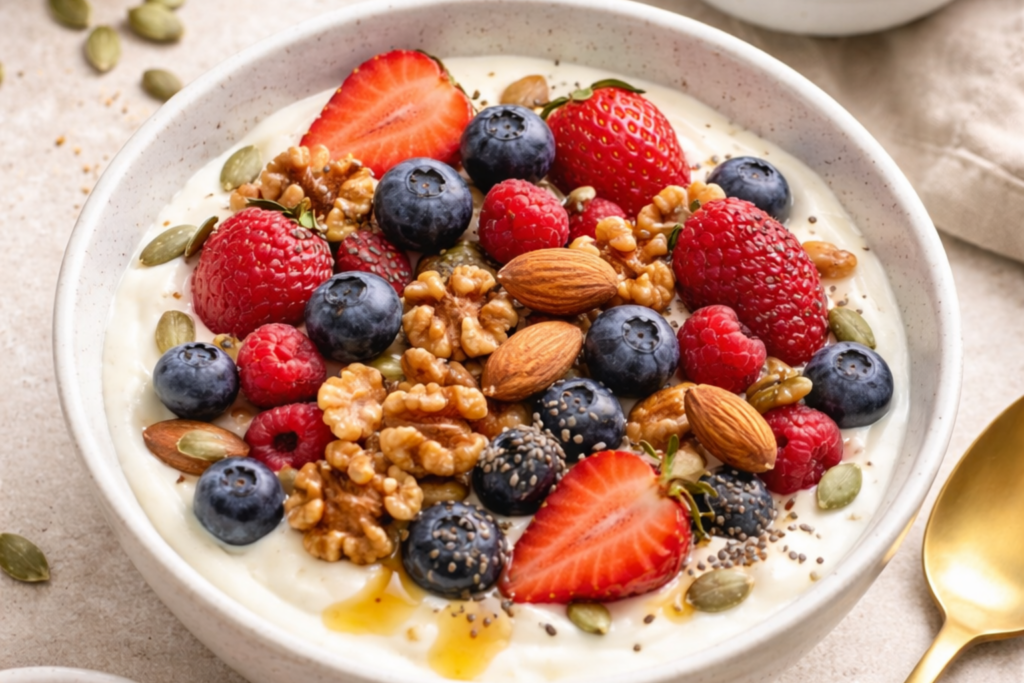
- Greek yogurt + berries + nuts
- Leftovers from dinner (honestly one of the best options)
Read this article to learn more simple ways to put balanced blood sugar breakfasts in to practice.
Your breakfast doesn’t have to be perfect—it just needs a solid protein base.
7. Waiting Too Long to Eat
The mistake:
Skipping meals or going too long without eating can lead to big swings in blood sugar—and often overeating later.
The fix:
Eat regularly, especially earlier in the day.
This helps:
- Stabilize energy
- Reduce intense hunger later
- Prevent evening cravings
Think of it as supporting your body instead of playing catch-up.
8. Choosing Low-Fat Everything
The mistake:
Removing fat from meals makes carbs hit your bloodstream faster.
The fix:
Don’t be afraid of fat.
Fat helps slow digestion and keeps blood sugar more stable.
Easy ways to add it:
- Butter on toast
- Olive oil on meals
- Avocado
- Full-fat dairy
Balanced meals are more satisfying—and more stabilizing.
9. Drinking Your Carbs
The mistake:
Liquid carbs (like juice, sweet coffee drinks, and even smoothies) are absorbed quickly and can spike blood sugar fast.
The fix:
Pair or upgrade them.
- Add protein (collagen, protein powder, milk)
- Have them alongside a meal
- Or turn them into a full, balanced option
You don’t have to give them up—just don’t let them stand alone.
10. Ignoring Portion Balance
The mistake:
Even healthy carbs can cause spikes when they make up most of the meal.
The fix:
Adjust the balance, not necessarily the food itself.
Instead of:
- A large bowl of pasta
Try:
- Pasta + ground meat + olive oil + side salad
Same food—just built differently.
11. Thinking It Has to Be Perfect
The mistake:
Feeling like you have to eat perfectly to “do it right”
The fix:
Focus on small improvements.
You don’t need to overhaul your entire diet. Just add one stabilizing element:
- Add protein
- Add fat
- Add a short walk
Those small changes add up quickly.
What a Balanced Meal Actually Looks Like
If all of this feels overwhelming, keep it simple:
Every meal should include:
- Protein
- Carbohydrates
- Fat
Examples:
- Eggs + toast + butter + fruit
- Ground beef + rice + avocado
- Greek yogurt + berries + nuts
- Chicken + potatoes + olive oil
That’s it. No extremes. No complicated rules.
Final Thoughts
Balancing your blood sugar isn’t about cutting foods out or being perfect.
It’s about building meals that actually support your body.
Once you start making these small changes, you’ll likely notice:
- More steady energy
- Fewer cravings
- Feeling full longer
- Less of that “crash” after eating
And the best part? You can do all of that without giving up the foods you enjoy.